Virtuals Says AI Agents Are Moving Toward On-Chain Economic Roles

Virtuals co-founder Jansen Teng said AI agents are evolving beyond chat and gaming into autonomous systems that can hold wallets, coordinate work and transact with one another. The company is building infrastructure for an “agent society,” while also exploring safeguards around intent, escrow and reputation.

Virtuals Says AI Agents Are Moving Toward On-Chain Economic Roles

What happened?

Virtuals co-founder Jansen Teng said AI agents are evolving beyond chat and gaming into autonomous systems that can hold wallets, coordinate work and transact with one another. The company is building infrastructure for an “agent society,” while also exploring safeguards around intent, escrow and reputation.

Why it matters

Virtuals co-founder Jansen Teng said the company is expanding its vision for AI agents from gaming-focused software into what it describes as an “agent society,” where autonomous systems can participate in economic activity. According to CoinDesk, Virtuals began with autonomous agents for games before moving into crypto influencers, trading agents and other agent-based software systems.

Virtuals co-founder Jansen Teng said the company is expanding its vision for AI agents from gaming-focused software into what it describes as an “agent society,” where autonomous systems can participate in economic activity. According to CoinDesk, Virtuals began with autonomous agents for games before moving into crypto influencers, trading agents and other agent-based software systems.

The development matters because Virtuals is positioning AI agents as potential economic participants rather than simple chat interfaces. Teng said the next phase could include agents that control wallets, trade with one another and perform specialized tasks, allowing them to earn, spend and coordinate with less constant human direction.

Virtuals is organizing its work around five areas: digital agents, physical agents and robots, coordination between agents, capital formation and governance systems. Teng described the longer-term goal as a “parallel society” in which agents operate in a permissionless economy and collaborate at scale.

The model also introduces risks. Teng pointed to incorrect user intent, service failures and scams as key failure points, and said Virtuals is working on intent verification, escrow-based transaction standards and reputation frameworks. He also argued that staking and reputation could eventually influence how much trust or capital an agent is allowed to manage.

Teng framed Virtuals as a decentralized alternative to agent ecosystems being explored by traditional financial institutions. He said agents that operate fully on-chain may avoid identity requirements until they connect with fiat payment systems or banking infrastructure, where traditional KYC rules are likely to apply.

The company is also looking beyond purely digital agents. CoinDesk reported that Virtuals is working with robotics startups, universities and Balaji Srinivasan’s Network School ecosystem to test real-world humanoid applications, with Virtuals focused on software, commercialization and data collection rather than building robot hardware.

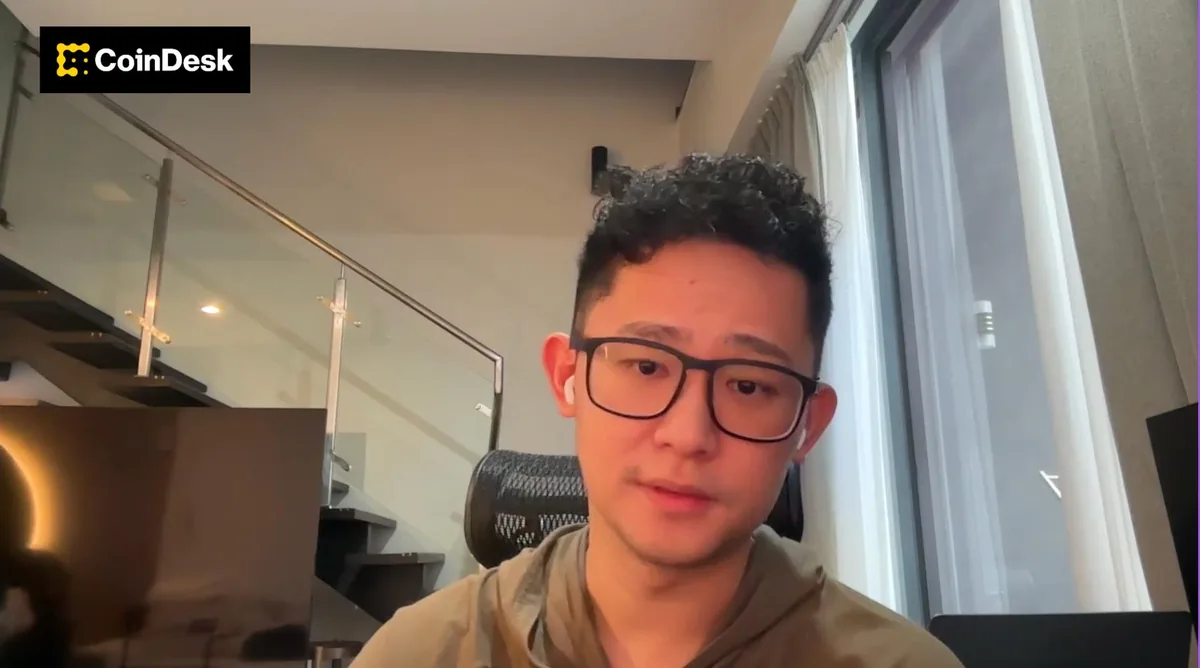
Source: CoinDesk

Keep exploring

Related stories

Bitget to Leave Japan and Close Remaining Positions by Year-End

Bitget to Leave Japan and Close Remaining Positions by Year-End

Bitget plans to exit the Japanese market and close all remaining positions by the end of the year. The move adds to ongoing shifts among crypto companies navigating Japan’s regulatory environment.

Read
State of Crypto countdown highlights key industry developments

State of Crypto countdown highlights key industry developments

CoinDesk’s State of Crypto coverage counts down recent developments shaping the crypto policy and market landscape. The report frames these changes as important for how companies and participants navigate the sector.

Read
Strategy Keeps STRC Dividend at 12%

Strategy Keeps STRC Dividend at 12%

Strategy said it is holding the dividend on its STRC preferred stock at 12%. The decision keeps the payout unchanged for investors in the company’s yield-focused security.

Read